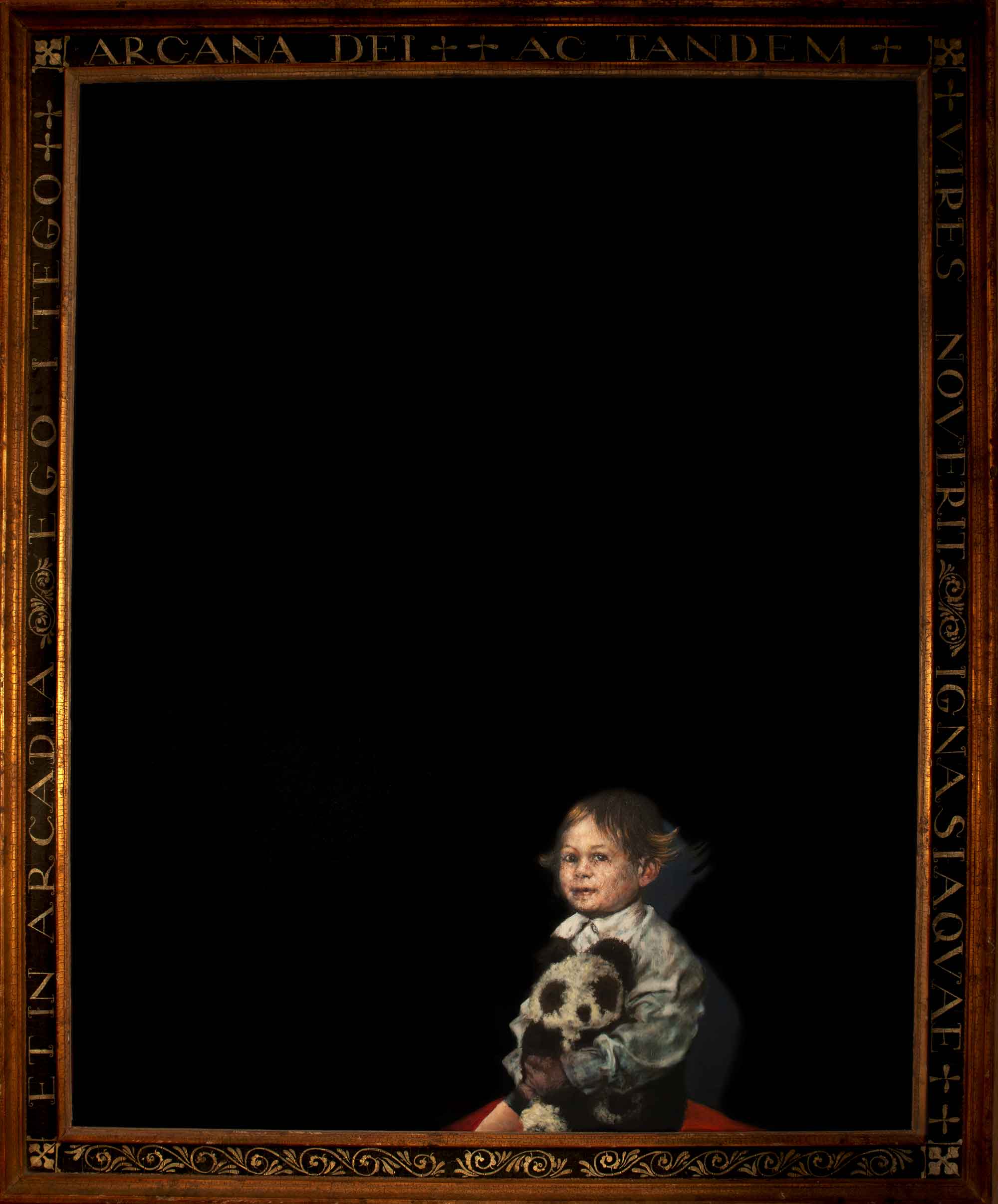
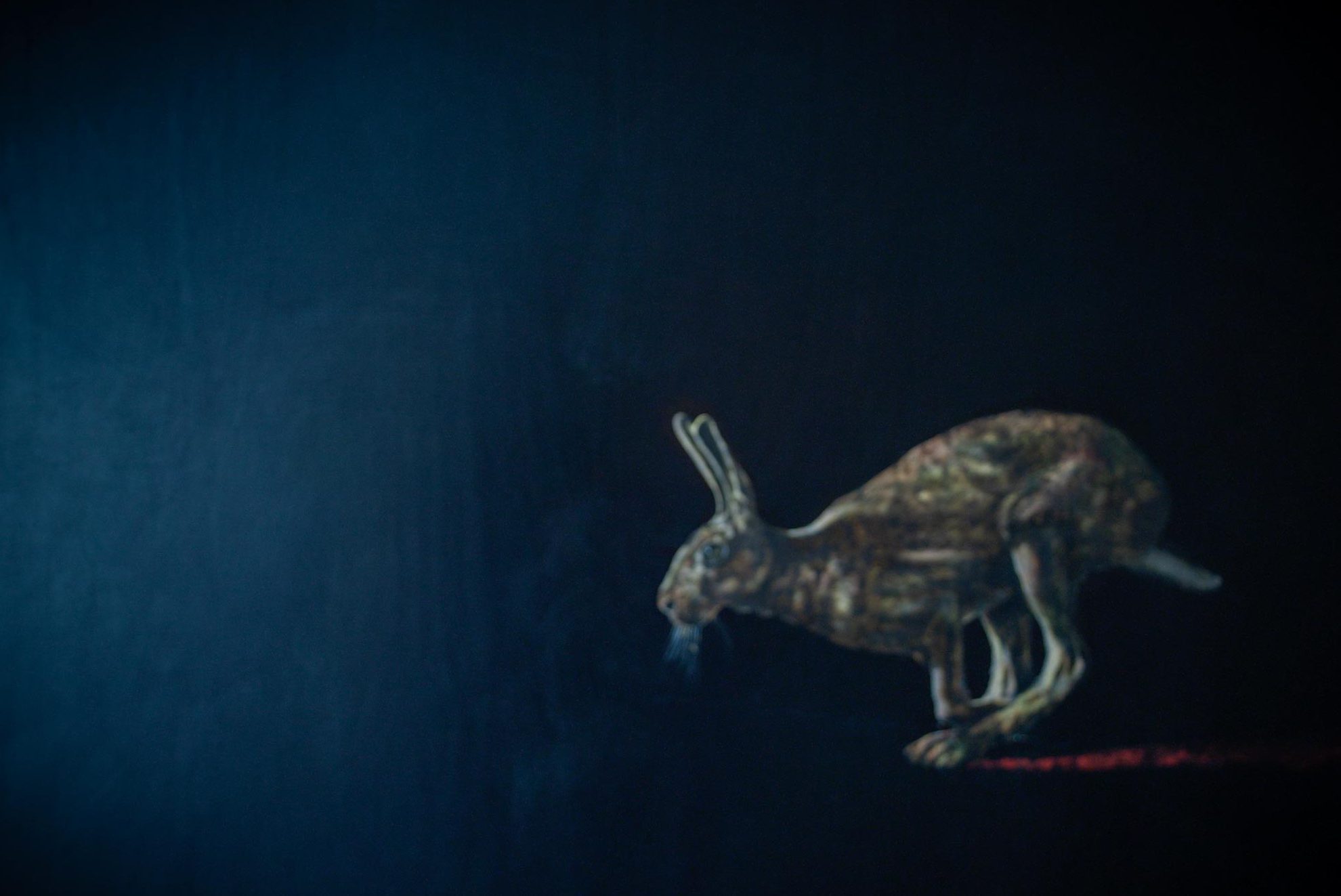
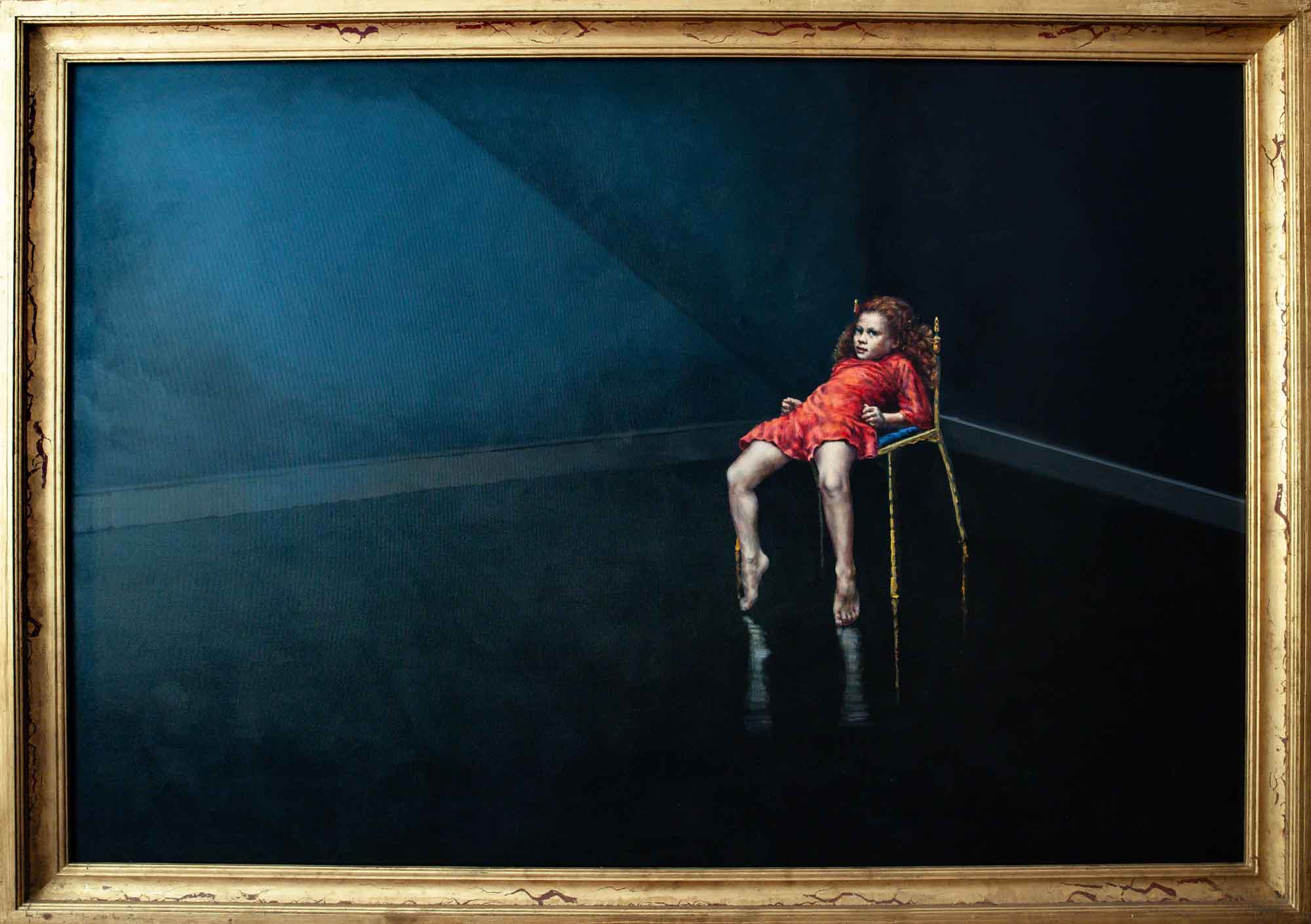
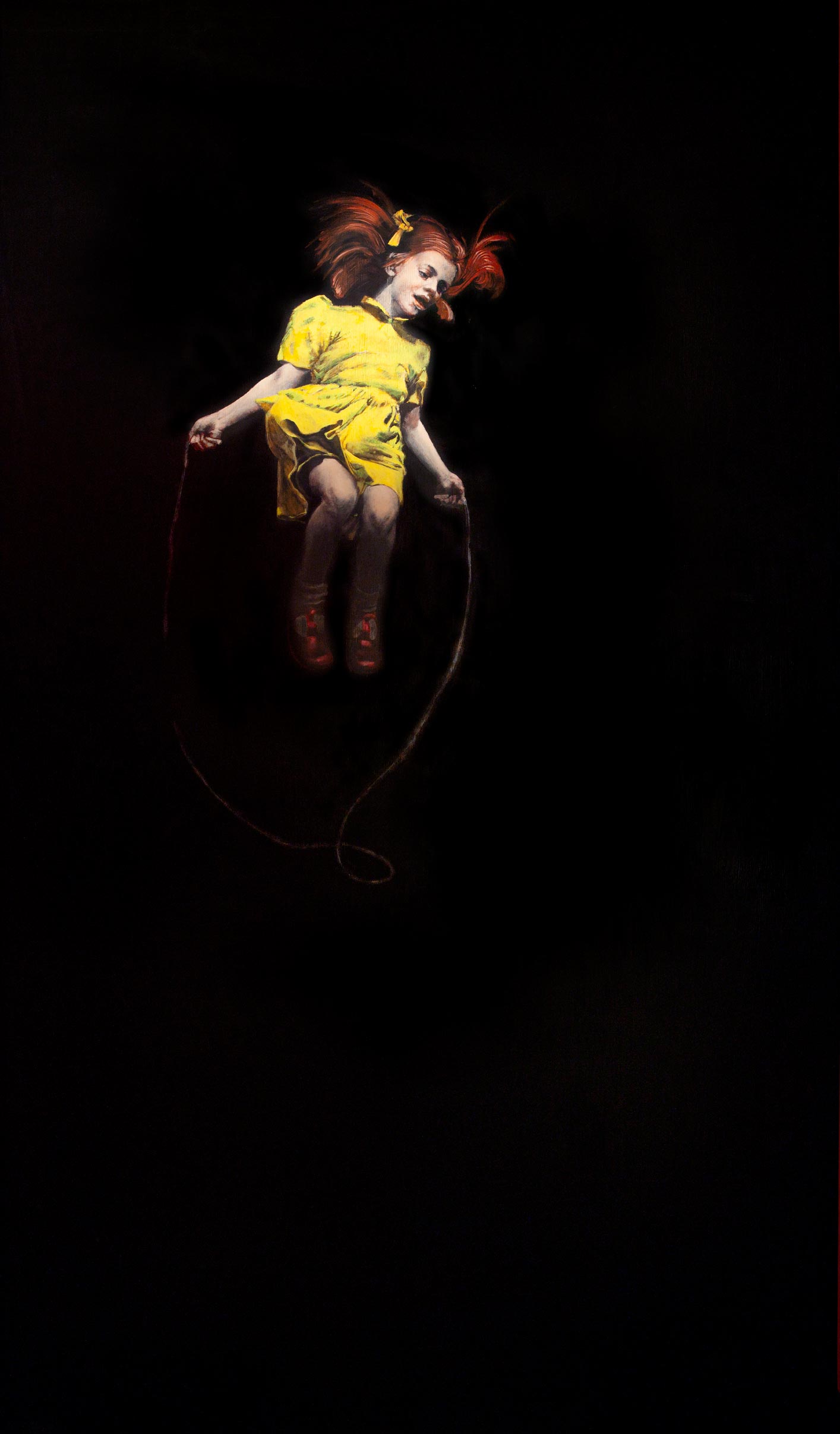
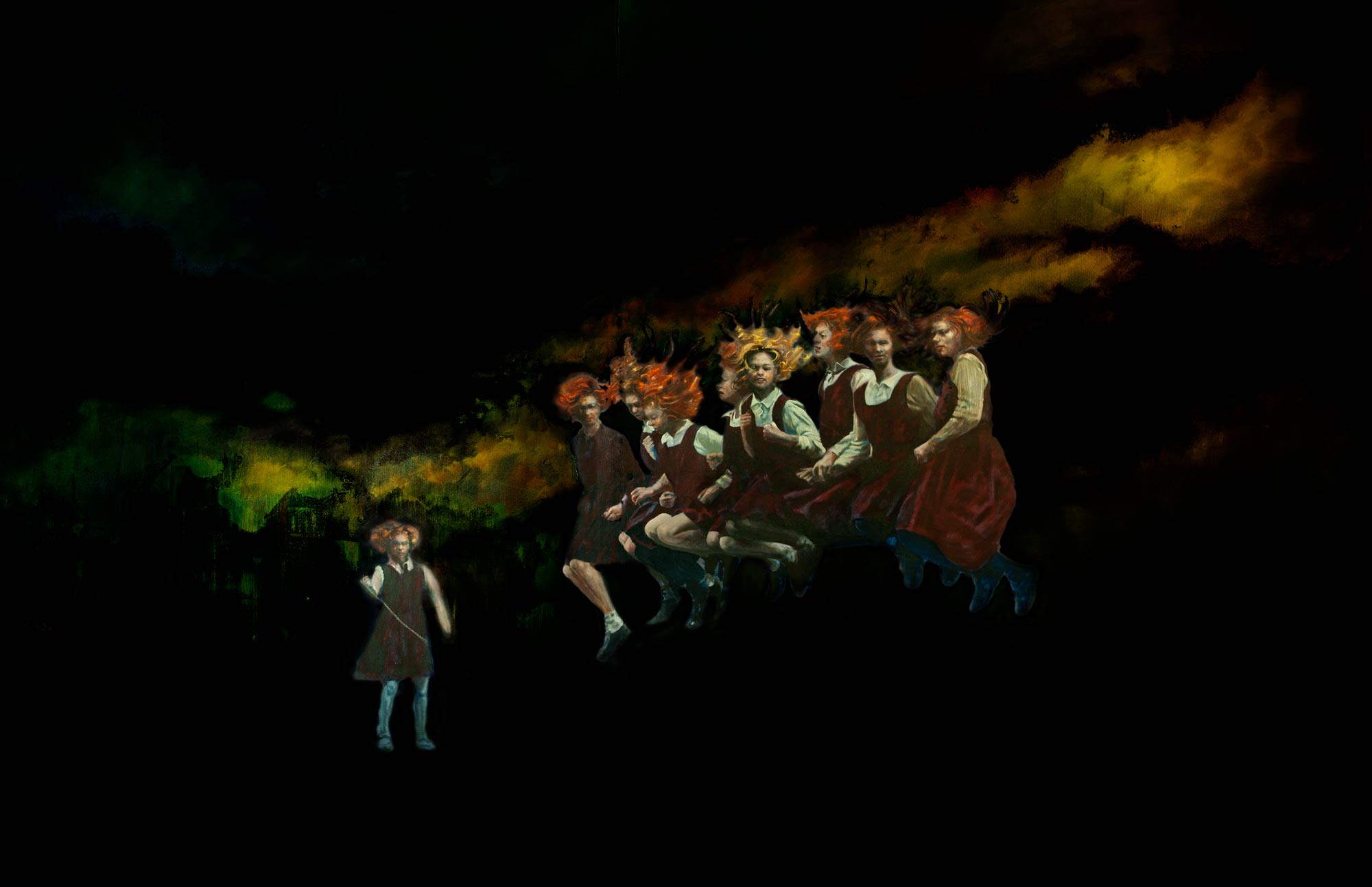
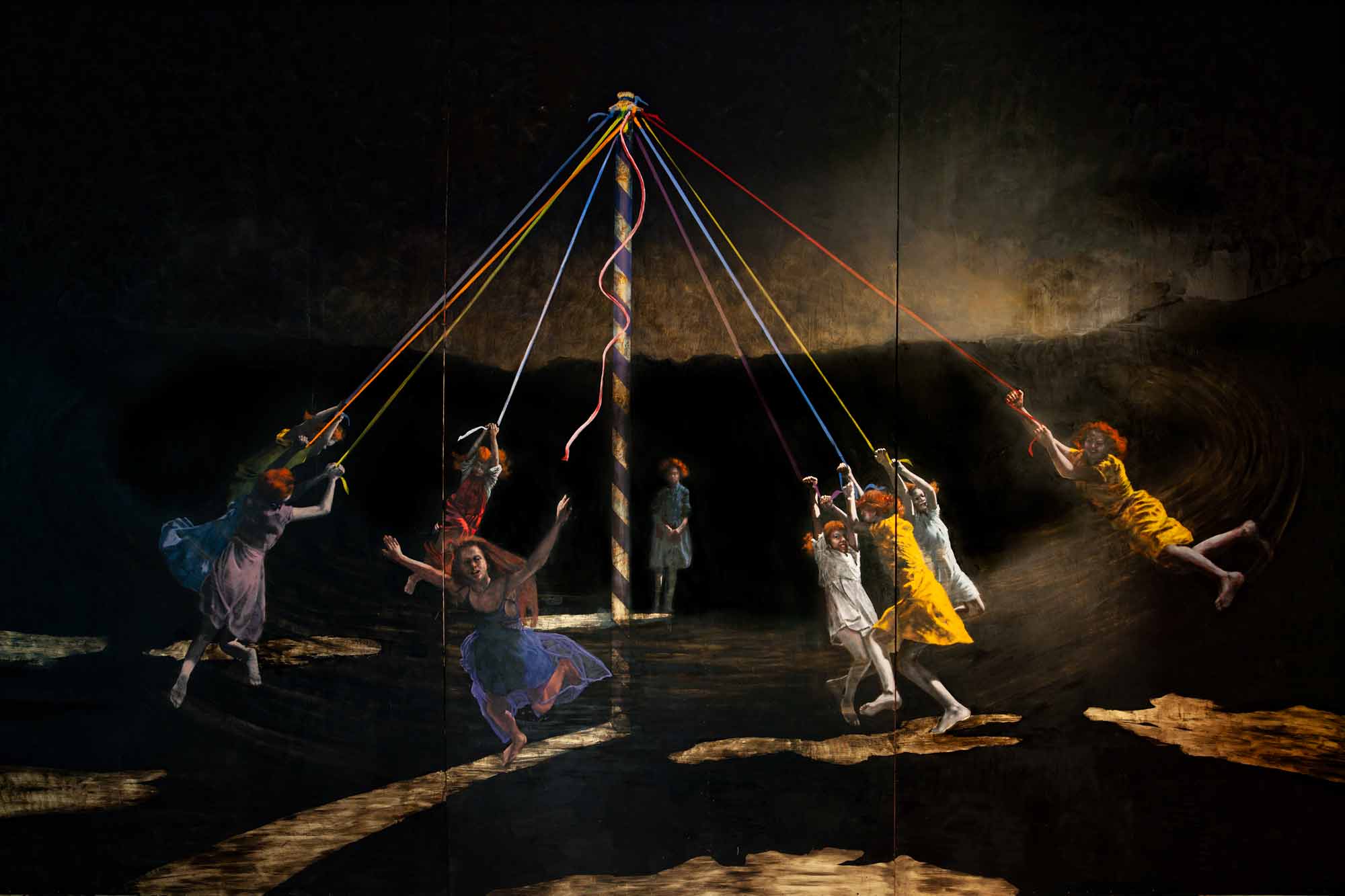
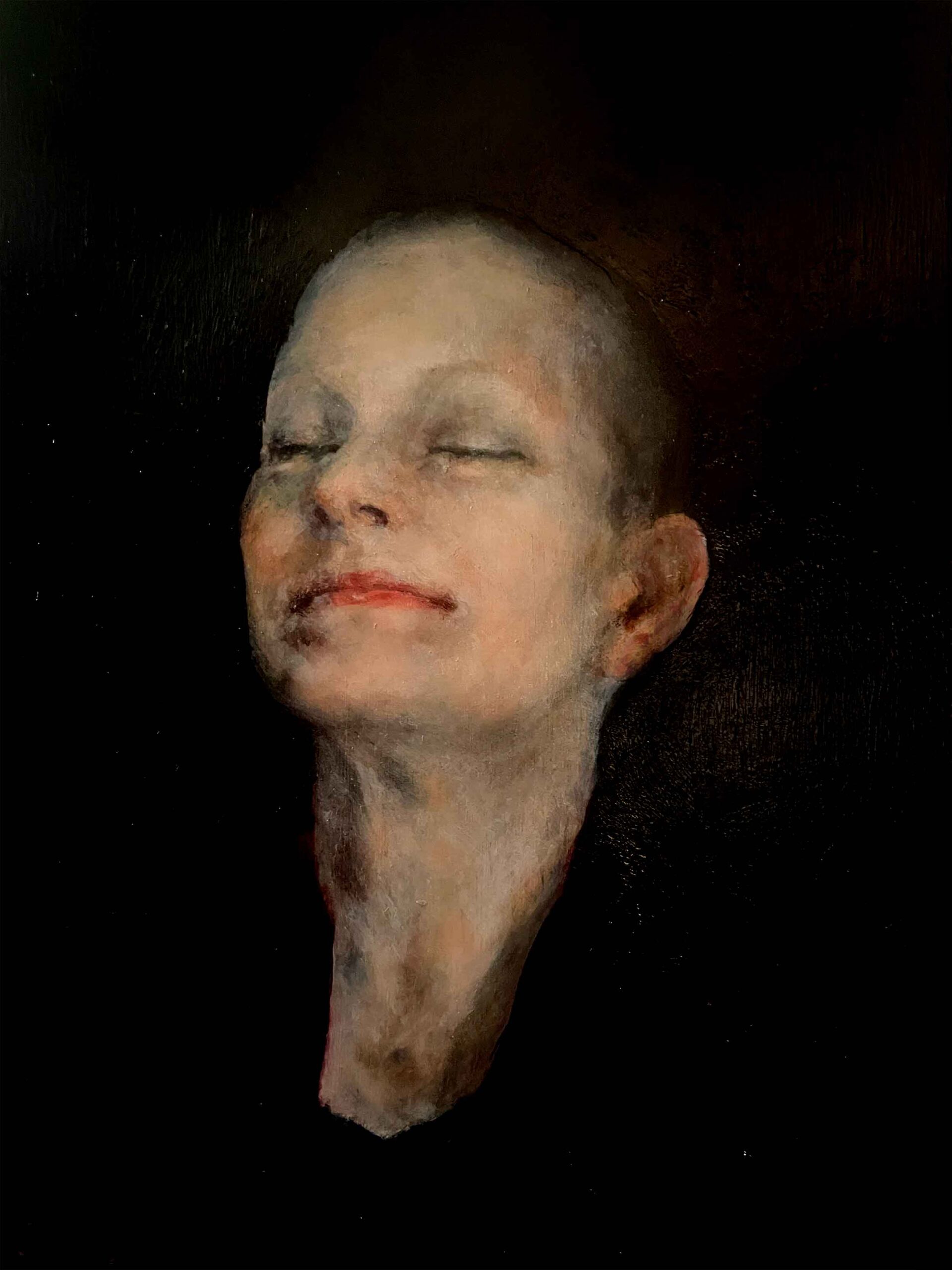
In “The Black Paintings” Tobias Keene places figures within an undifferentiated black field, removing the usual cues of setting, narrative, and time. The result is a body of work in which attention is drawn almost entirely to posture, gesture, proximity, and relation. Black does not function simply as a background. It becomes the condition that holds the figures — compressing space, suspending movement, and allowing small gestures to carry unusual weight.
Across the series, Keene returns to childhood not as nostalgia or anecdote, but as a state of formation. Familiar actions — sitting, skipping, dancing, holding, gathering — are separated from their expected environments and held in stillness. A child may appear mid-motion, yet the movement does not quite progress. A group may suggest play, yet the scene resists release. An animal may appear close to the body, yet the relation remains ambiguous. These are not scenes in the ordinary sense. They are moments held under pressure.
What emerges is a sustained meditation on restraint, vulnerability, attachment, and control. The paintings are quiet, but not passive. They ask how identity is shaped before it is fully named; how bodies learn balance, proximity, obedience, resistance, and relation. Repetition appears throughout the series, but without a clear narrative sequence. Instead, each work seems to return to the same question from a different angle: what does it mean to be held — by care, by ceremony, by expectation, by inheritance, by the invisible structures that shape a life?
Rather than resolving into story, The Black Paintings remain at the threshold between action and stillness. They establish a formal and psychological field in which questions of formation, authority, ritual, inheritance, and self-authorship quietly come into view.
VIEW PAINTINGS